Skip to content
Hearth Home Comfort(612) 555-0148Call Hearth Home Comfort

Indoor air quality

A tight house holds warmth beautifully. It also holds everything else.

Filtration, ventilation and source control are three different jobs solving three different problems. Most homes only need one of them, and the industry is happy to sell you all three.

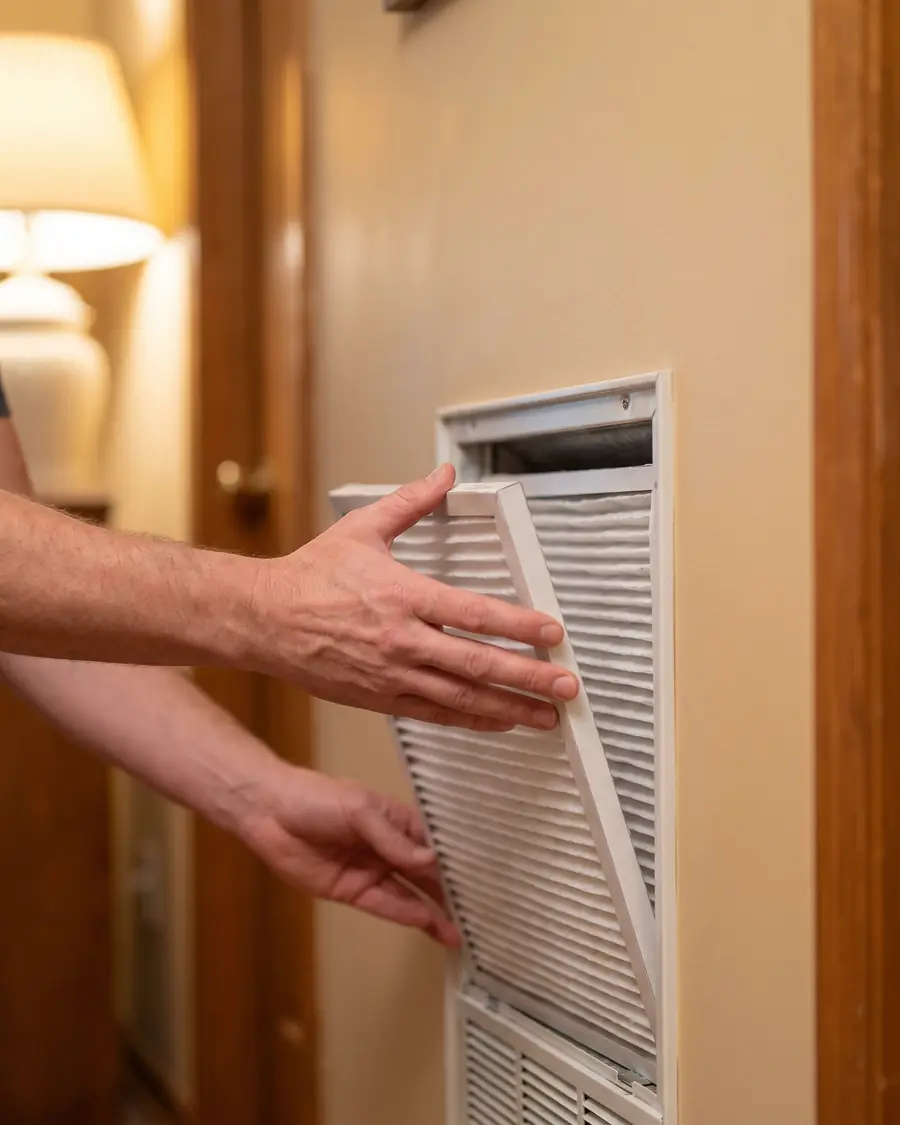
Clean hands sliding a fresh pleated air filter into a hallway return-air grille

Three jobs, and which one is yours

Work out which of these describes your complaint and you have already made the expensive part of the decision.

Filtration

Catching what is already circulating

A better filter catches more, and it also resists more airflow. In a system built around a one inch slot, jumping to a high MERV filter can cost you a quarter of your airflow and make every other complaint worse. The fix is usually a deeper media cabinet, four or five inches, which gives you high filtration and low resistance at the same time.

Right when: dust, pet dander, seasonal allergies, someone in the house with asthma.

Ventilation

Replacing stale air with fresh

A filter cannot remove carbon dioxide, cooking smells, or the off-gassing from a new carpet, because those are not particles. Only outside air does that. In a tight modern envelope, and in a well air-sealed old house, mechanical ventilation stops being optional. An HRV or ERV brings fresh air in and stale air out while recovering most of the heat you already paid for.

Right when: the house feels stuffy, windows fog, a new build or a deep energy retrofit.

Source control

Stopping it at the start

The cheapest air quality improvement is nearly always removing the source rather than treating the symptom. A sealed combustion furnace that stops backdrafting. A properly ducted bathroom fan that actually reaches the outside rather than the attic. A crawlspace with a vapour barrier. None of it is glamorous and all of it works.

Right when: smells that come back, damp basements, a bathroom fan that has never worked.

The figures worth knowing

One inch filter slot
MERV 8 to 11
The practical ceiling before airflow loss starts causing new problems. Change it every one to three months.
Media cabinet
MERV 13, 4 to 5 inch
High filtration with low resistance, because the surface area is far larger. Change it every six to twelve months.
Ventilation choice
ERV for most homes here
Keeps a little moisture in during a dry January and a little out during a humid August. An HRV is better where damp is the problem.
Fresh air target
ASHRAE 62.2
The residential ventilation standard we size against. It scales with floor area and bedroom count rather than being a single number.

Air quality questions

What MERV rating should I use?

It depends entirely on your filter slot. In a standard one inch slot, MERV 8 to 11 is the practical ceiling, and going higher will cost you airflow you cannot spare. In a four or five inch media cabinet, MERV 13 is comfortable and is the rating generally recommended for capturing fine particles. The right move for most houses that want MERV 13 is to fit the deeper cabinet first.

What is the difference between an HRV and an ERV?

Both bring in fresh air and recover heat from the air they exhaust. An HRV transfers heat only. An ERV transfers heat and some moisture. In a Minnesota winter an ERV keeps a little more humidity in the house, which is helpful when January air is bone dry. In a humid August it keeps a little outdoor moisture out. For most Twin Cities homes we lean ERV, but a house with a persistent damp problem may be better with an HRV.

Does my house need mechanical ventilation at all?

Any house built to modern code does, and it will usually already have something. An older house that has been air sealed and insulated properly often does too, and this is the part people forget: making a leaky house tight without adding ventilation trades one problem for another. A blower door test tells you where you stand.

Are UV lights and ionisers worth it?

We will fit them if you want them and we will not push them. The evidence for in-duct UV is genuinely mixed and depends heavily on lamp placement and dwell time. Some ionisers produce ozone as a byproduct. If your budget is finite, a deeper media filter and working ventilation will do more for the air in your house than either, and we would rather tell you that.

How often should I change the filter?

A one inch filter, every one to three months, and more often with pets or during a remodel. A four or five inch media filter, every six to twelve months. Write the date on the cardboard edge with a marker when you fit it. That one habit prevents more service calls than anything else we could tell you.

Start with which problem you actually have

An air quality visit measures your current filter resistance, checks your ventilation against the house, and tells you which of the three jobs is yours. Often it is the cheapest one.