Furnaces
Cracked heat exchangers: what the phrase means, and when to take it seriously
The one furnace diagnosis that is genuinely urgent, and the one most often used to sell a furnace that did not need replacing. How to tell them apart.
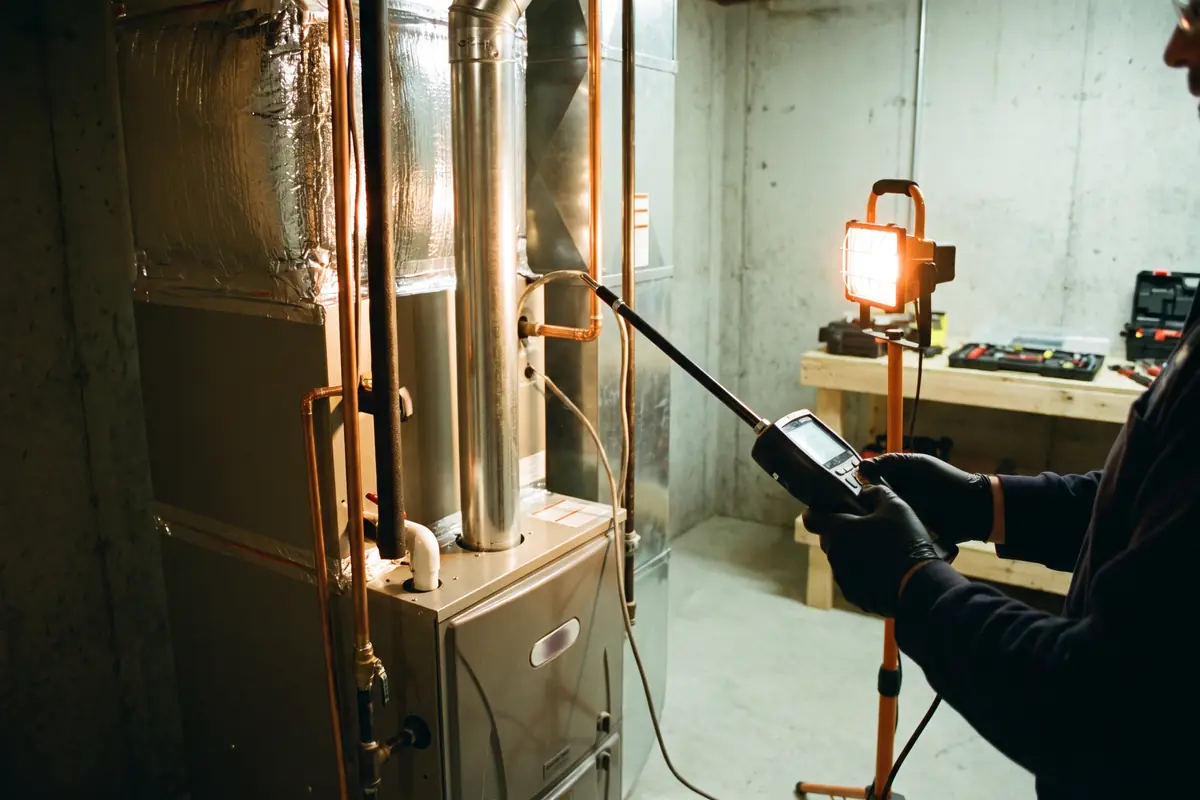
There is no phrase in this trade that does more work than "cracked heat exchanger". It is simultaneously the one furnace fault that is genuinely a safety matter rather than a comfort one, and the phrase most often reached for by somebody who would like to sell a furnace on a Tuesday evening in January.
Both of those things are true at once, which makes it hard for a homeowner to know what to do. Here is what the words actually mean and how to tell the two situations apart.
What a heat exchanger is
Inside a gas furnace there are two completely separate air paths that never touch. One is the combustion path: gas burns, and hot exhaust gases travel through a set of sealed metal chambers and out of the flue. The other is the house air path: your blower pushes air from the return ducts across the outside of those chambers, where it picks up heat, and on into your rooms.
The heat exchanger is that metal wall. Its entire job is to transfer heat from one stream to the other while keeping the two gases separate. It spends its whole life being heated to several hundred degrees and then cooled again, several times an hour, for fifteen to twenty-five years. Metal that is repeatedly expanded and contracted eventually fatigues and splits. That is a normal end of life, not a defect.
Why a split matters
If the wall between the two paths opens, combustion gases can enter the air being blown into your house. Those gases include carbon monoxide, which is colourless, odourless, and binds to haemoglobin far more readily than oxygen does.
The symptoms are the difficult part: headache, nausea, dizziness, fatigue, confusion. They look exactly like a winter virus. The one distinguishing feature is that they improve when people leave the house and return when they come back, and that they often affect more than one member of the household at once.
If a carbon monoxide alarm sounds, get everyone outside, leave a door open, and call the gas utility first. Not a contractor. Not us. The utility, first.
How a real diagnosis is made
A heat exchanger fault is not diagnosed by opinion. There are four legitimate methods, and a good technician will use several of them together.
Visual inspection with a camera. A borescope down through the burner ports and up from the collector box. Not every crack is visible this way, because a lot of the exchanger is not reachable, but when a crack is visible it is unambiguous and it can be photographed.
Combustion analysis. An analyser in the flue reads carbon monoxide, oxygen and stack temperature. A pattern where flue CO changes significantly the moment the blower starts is a strong indicator that house air is being drawn into the combustion path through an opening.
Flame observation. Watching the burner flames at the moment the blower engages. Flames that visibly roll, distort or lift when the blower starts are pointing at the same thing.
Ambient carbon monoxide measurement. A reading in the supply air stream and in the living space, which is what actually tells you whether anything is reaching people.
Any one of these on its own can mislead. Together they are conclusive, and every one of them produces a number or an image that can be shown to you.
The question to ask
If a technician tells you your heat exchanger is cracked, the correct response is calm and specific: "Can you show me?"
A camera photograph. The combustion analyser readings, before and after the blower engages. A video of the flame roll. Any competent technician who has actually found a crack will be pleased to show you, because it is the interesting part of the job and because it makes the conversation that follows much easier for both of you.
Somebody who cannot produce any of that, and who is pressing for a decision tonight, is telling you something useful about themselves. Red-tagging a furnace is a serious act and it should come with evidence.
What happens if it is real
A confirmed crack means the furnace is shut down and tagged, and it should not be run again. That is not a sales position, it is the correct call, and we make it knowing perfectly well how it looks.
What we do alongside it: arrange temporary heat so you are not in a cold house while you decide, give you the repair option honestly if the exchanger is genuinely still under warranty and available, which for a furnace over about twelve years old it usually is not, and give you time to get another quote if you want one. A house with the furnace off and space heaters running is uncomfortable, not dangerous, and nobody should be signing a five-figure contract at 9pm under pressure.
Reducing the odds in the first place
Cracks are a fatigue failure, and fatigue is driven by cycling and by overheating. The two things that genuinely shorten heat exchanger life are an oversized furnace, which short cycles constantly, and restricted airflow, which lets the exchanger run hotter than it was designed to.
Which brings it back to the same two things as everything else on this website: correct sizing at installation, and enough return air. A Manual J calculation and a measured temperature rise at commissioning are not paperwork. They are what makes a furnace last twenty-two years instead of fourteen.
And in the meantime: a carbon monoxide alarm on every sleeping level, tested twice a year. They cost almost nothing. We carry them on the vans and we will fit one while we are there.